
The post How Do I Know It’s Time to Change My HOA/COA Management Company? appeared first on Towne in the News.
]]>How can you tell? Here are two major red flags that signify it might be time to consider a new management partner.
- Less-than-stellar communication.
If your management partner is not returning your phone calls or is failing to provide updates and reports promptly, this is a sure sign things aren’t going well. Other significant signs include failing to address concerns in a satisfactory manner and a lack of rapport with residents. All of these factors work together to undermine resident confidence and reduce the quality of life in your community.
- Financial concerns.
Are you receiving timely and accurate financial reports? Are proceeds paid consistently? Have your HOA/COA fees remained stable? If you answer “no” to any of these questions, it might be time to look elsewhere for support. Poor financial oversight can quickly lower property values because it indicates poor decision-making and managing of assets. [TS1] It can also cause increased expenses which can diminish community morale.
Of course, other factors might point you to consider changing partners. Your overall satisfaction, whether you feel expressed concerns are being addressed, and the quality of relationship among the HOA/COA board, homeowners, and management company all can play a part in choosing to look elsewhere.
If you have seen red flags or have other concerns with your current management partner, take a look at Towne Properties. Towne relies on tried-and-true policies and standards to provide stability. We have decades of experience managing operations and building positive relations with communities.
When you partner with Towne, you can expect:
· Vetting, hiring, and managing staff and vendors with security and quality of service in mind.
· A fully staffed HR team that has experience screening qualified candidates, including conducting background checks, along with the day-to-day work of managing benefits and recordkeeping.
· A skilled accounting team that will maintain meticulous records and reporting; together with our association managers, they provide coaching and guidance to board members so they understand the data to achieve or maintain financial stability.
· Onsite staff trained to deliver concierge-level service.
· 24-hour emergency maintenance service and backup to keep our communities safe, secure, and up and running.
Our services are not cut-and-paste. We tailor what we do to your needs. Ready to learn more? Contact us for a consultation.
The post How Do I Know It’s Time to Change My HOA/COA Management Company? appeared first on Towne in the News.
]]>The post Hiring Professional Management for Your HOA/COA appeared first on Towne in the News.
]]>Living in an HOA/COA community comes with many advantages, but volunteers serving on boards often find determining, managing, and enforcing their responsibilities to be challenging. Working with a professional HOA/COA management company can provide significant benefits and lessen the load of volunteer boards.
Once hired a partner, a management company works with the elected HOA board to carry out the board’s decisions in day-to-day operations.
The five most significant contributions of a professional management company:
- Offers depth of experience
Professional management companies are just that: professional. A hired firm brings deep experience and knows how to handle every aspect of the job, from maintenance services to day-to-day operations. What’s more, such a firm can bring resources, strategies, and tools that the local self-managed board might not have. Most significantly, a professional management partner ensures proper financial reporting, accuracy, and fiduciary responsibility.
- Ensures consistent, unbiased support
A professional management firm is valuable as a consistent and impartial resource. It can handle communication with homeowners, local officials, and vendors and ensure such communication is timely, accurate, and professional. It will be more available to handle requests and inquiries within a consistent time frame. Their outside perspective can also go a long way in managing expectations, handling complaints, and smoothing ruffled feathers.
- Enhances property value
Professional managers can help keep property values steady by keeping required tasks and maintenance up to date. They can also help ensure visual harmony and aesthetic appeal by managing the property and grounds. A firm’s established relationships with local vendors can often bring a higher level of service at a lower cost.
- Provides continuity and succession planning
Many HOA/COAs benefit from extremely dedicated volunteers. However, volunteer boards can turn over, while a management company remains the same. The right management company can assist boards in planning for leadership transitions and step in to ensure stability when inevitable vacancies occur. Plus, professional service providers can train and coach new (and existing) volunteers to ensure consistency and continuity.
- Reduces and mitigates risk
The ins and outs of property management can be complex. A professional manager can ensure rules and regulations are followed within the community, and that they comply with local laws. Often, management companies can assist the board with legal advice and/or step in to serve as a buffer among neighbors/ residents in the event of a dispute.If these benefits sound appealing to your community, look no further than Towne Properties for your management needs. Towne relies on tried-and-true policies and standards to provide stability. We have decades of experience managing operations and building positive relations with communities.
When you partner with Towne, you can expect:
· Vetting, hiring, and management of staff and vendors with security and quality of service in mind.
· A fully staffed HR team that has experience screening qualified candidates, including conducting background checks, along with the day- to-day work of managing benefits and recordkeeping.
· A skilled accounting team that will maintain meticulous records and reporting; together with our association managers, they provide coaching and guidance to board members so they understand the data to achieve or maintain financial stability.
· Onsite staff trained to deliver concierge-level service.
· 24-hour emergency maintenance service and backup to keep our communities safe, secure, and up and running.
Our services are not cut-and-paste. We tailor what we do to your needs. Ready to learn more? Contact us for a consultation.
The post Hiring Professional Management for Your HOA/COA appeared first on Towne in the News.
]]>The post The Role of the Homeowner’s Association Board, the Management Partner, and the Homeowner appeared first on Towne in the News.
]]>In this article, we outline each group in detail – who they are and what they’re responsible for.
- The Homeowner’s Association (HOA) Board
The Homeowner’s Association Board is composed of volunteers elected by homeowners to represent the interests of the community.They are responsible for:
· Providing oversight to the homeowner’s association.
· Creating policies and rules to govern the community.
· Overseeing architectural review requests.
· Hiring and managing firms to conduct business.
· Ensuring periodic independent financial reviews.
· Making decisions for the community as needed.
- The Management Partner
The management partner is an outside vendor, hired and managed by the Homeowner’s Association Board, to carry out day-to-day operations. It’s important to note that the management partner is not a decision-making body, but rather “boots on the ground” to carry out the decisions of the community’s HOA.“The management partner's role is always to be a facilitator,” said Timothy J. Snowden, CMCA®, AMS®, ARM®, PCAM®, Vice President of Towne’s Carolina Regional Office. “We always give the board and homeowners the best information we can, focusing on the facts, and we always follow procedure. We should never offer an opinion other than the responsibilities of each party.”
They are responsible for:
· Performing contractual duties to implement the vision of the HOA Board.
· Managing billing and payment collections.
· Ensuring enforcement of community rules.
· Maintaining clear and timely communication with community residents and the HOA Board.
· Overseeing maintenance of community facilities and grounds.
· Managing and reconciling bank accounts and ledgers and preparing/distributing timely and accurate financial reports to the HOA Board and homeowners.
“Management's key role during disputes between a homeowner and the board is to be an impartial moderator. They ensure that everyone follows both the association's policies and procedures and the business judgment rule*[JB1] , so that the board can perform its fiduciary duties,” Tim added.
- The Homeowner
The homeowner is a property owner within a managed community.They are responsible for:
· Learning the community rules, policies, and regulations.
· Following community rules, policies, and regulations.
· Staying informed of current events and community topics.
· Paying dues, fines, and other payments as required.
- Replying to necessary communication promptly.
If this structure sounds beneficial for your community, we invite you to consider Towne Properties for your management needs. Towne relies on tried-and-true policies and standards to provide stability. We have decades of experience managing operations and building positive relationships with communities.
When you partner with Towne, you can expect:
· Vetting, hiring, and management of staff and vendors with security and quality of service in mind.
· A fully staffed HR team that has experience screening qualified candidates, including conducting background checks, along with the day-to-day work of managing benefits and recordkeeping.
· A skilled accounting team that will maintain meticulous records and reporting; together with our association managers, they provide coaching and guidance to board members so they understand the data to achieve or maintain financial stability.
· Onsite staff trained to deliver concierge-level service.
· 24-hour emergency maintenance service and backup to keep our communities safe, secure, and up and running.
Our services are not cut-and-paste. We tailor what we do to your needs. Ready to learn more? Contact us for a consultation.
*The business judgment rule is a legal standard that says a director of a corporation must make decisions in good faith, with the care that a reasonably wise person would use, and that can reasonably be considered in the best interests of the corporation. If the director follows this rule, you cannot sue them for violating their duty of care for the corporation.
The post The Role of the Homeowner’s Association Board, the Management Partner, and the Homeowner appeared first on Towne in the News.
]]>The post How Personalized COA Management Can Increase Satisfaction in Luxury High Rises appeared first on Towne in the News.
]]>It takes a more thoughtful mindset to deliver on these expectations. Offering personalized service and tailored attention requires a management team that has expertise in providing experiential amenities. Condo owner association (COA) boards will not hit the mark with inadequate or underdeveloped staff.
Delivering on Resident Expectations
To be sure, high-end finishes, stunning views, and desirable locations will still sell units. But residents are also looking for amenities and experiences that cater to how they live, work, and socialize. Fitness centers are a plus. But meaningful programming — such as spin classes, wellness classes, and even virtual reality studios — are differentiators. Courtyards, rooftop terraces, and other places to gather are a plus. But exclusive events — such as a wine tasting with a celebrated local chef — are a step above.
Luxury high-rise residents also expect convenience. At a minimum, COAs need to offer a self-service portal for community information and service requests. Beyond that, residents desire concierge service. Think along the lines of booking reservations, managing grocery deliveries, or arranging for pet care.
Residents also want an infrastructure backbone that supports their needs. Technology is fully embedded in how we work, access entertainment, and even interact with our appliances. It’s not unreasonable for residents to expect their technology and community assets will work without disruption 24/7. When they don’t, COA board members will hear about it.
Association Management with a Concierge Mindset
COA boards simply can’t deliver on expectations at this level with a part-time association manager or a staff that is not trained in concierge-style service. That’s like trying to run a Michelin-Star establishment with a quick-service restaurant approach. There’s nothing wrong with quick-service restaurants. However, the expectations of the clientele are significantly different.
Providing personalized service is not just a matter of calling up a driver or expediting a service request. High-end residential tower management teams need to be:
· Problem-solvers who can respond quickly and efficiently when technology is not working or infrastructure goes awry
· Creative thinkers who can offer unique, personalized, experiential activities and programming that resonates with residents
- Detail-oriented staff who know residents by name, remember birthdays, and pay attention to habits and hobbies and act accordingly
It requires active listening and using resident feedback to develop and organize activities and amenities that respond to client needs. Smart staffers will also know how to anticipate needs that residents haven’t even voiced yet and bring them to the COA board for consideration. For example, ensuring parking garages are equipped with electric vehicle charging stations, suggesting the addition of golf simulators or pickleball courts, or converting shared community space into a business center or coworking space.
Towne Knows Luxury High Rises
Towne can help COA board members deliver on expectations and foster resident satisfaction with professional association management. We don’t overpromise and underdeliver by “phoning it in.” Our staff is onsite, working as a partner to your board and serving the go-to resource for your residents.
We take on the risk of hiring, managing, and training staff so you don’t need to. Our fully staffed human resources team has extensive experience with screening for qualified candidates. In addition, we handle the day-to-day details like managing benefits and scheduling coverage when a staff member is ill or on vacation.
Just as important, we bring deep relevant experience to the table. Our teams are staffed with long-tenured professionals who have a passion for delighting residents with personalized service. By listening to COA members, monitoring emerging trends, and leaning on our established network, they will help your board deliver not just exclusive amenities, but also exclusive experiences. And with our unparalleled focus on training and professional development, we ensure our staff members stay current with industry changes.
Ready to work with partners and coaches who are dedicated to you? Contact us today to discuss how we will tailor our services to your needs.
The post How Personalized COA Management Can Increase Satisfaction in Luxury High Rises appeared first on Towne in the News.
]]>The post Six Responsibilities Every HOA Board Member Needs to Master appeared first on Towne in the News.
]]>It’s also a consequential role that presents its share of challenges. HOA boards are responsible for enforcing their governing documents, protecting property values, and maintaining common property. They are charged with financial stewardship and with executing service agreements and contracts for the HOA. In addition, the priorities and actions of a board directly contribute to a community’s well-being and appeal. As a result, board members must sometimes make difficult decisions or be subject to complaints from neighbors and friends.
Understanding the role and responsibilities of a board member is crucial to serving in your new role with confidence. Here are six top-level responsibilities that will get you off to a good start:
- Know the rules and regulations that govern your community. This is one of the most critical responsibilities for a board member — both to keep the peace and to protect you and the board from liability. Every decision the board makes and action it takes must follow the rules and regulations established by your community. These include the community covenants and restrictions (CC&R) and your governing documents. Don’t overlook the federal, state, and local laws that may also apply.
- Understand your role’s responsibilities. The president, vice president, secretary, treasurer, and at-large members all have specific functions and tasks spelled out in the board’s governing documents. As a board member, you should be informed about what your role entails so that you can fulfill your duties as assigned. Likewise, board members need to respect the boundaries of each role to maintain positive community relations, orderly vendor relations, board harmony, and overall organization.
- Understand your responsibilities versus that of your association manager. Association managers can make life much easier for board members, but they can’t do everything. For example, many new boards assume their management company is responsible for raising HOA fees or conducting special assessments. In fact, the board makes those decisions. Recognizing where their role ends and yours begins will help you avoid surprises.
- Respect the line between board member and community member. When you are elected to a board, you may be called on to make decisions that are good for the community but unpopular with individual homeowners. As you weigh the issues, you need to be ready to set your personal interests aside. This is true both for decisions that affect your property and that may affect your relationship with neighbors and friends.
- Follow due process for disputes. Homeowner disputes can trip up even seasoned board members. Unless the disagreement is related to a governing document violation, board members should refrain from getting involved. When disputes must be settled by the board, it is imperative to follow the due process outlined in your CC&R. It’s natural to want to intercede, especially if friends are involved. But what you do for one, you must do for all. Following your due process guidelines will limit your liability and help ensure exceptions don’t creep into the rules.
- Speak with one voice. You aren’t required to agree with your fellow board members on every item that comes up for discussion or vote. However, once a vote is taken, it’s essential that all board members accept the outcome. Supporting board decisions — or at least, not publicly detracting from these decisions — is key to promoting community unity.
Rely on a Trusted Partner to Provide Guidance
Figuring out the ropes can be overwhelming, but it doesn’t need to be. Working with a professional and highly skilled association manager can make all the difference between proceeding with confidence and learning on the fly.
Effective association managers will provide coaching and guidance, help you navigate the sometimes-murky waters of homeowner relations, and facilitate meetings. They will help manage risk by ensuring the board complies with all governing documents. In addition, expert association managers will assist with everything from managing vendors to handling collections and enforcement.
At Towne Properties, our association managers undergo rigorous training to provide expert guidance and assistance to the boards they serve. Trusted by more than 800 associations, we are creative, client-first problem-solvers with an extensive track record of success.
Learn more about how our customized, full-service management solutions can improve your operations, so you can achieve your priorities.
The post Six Responsibilities Every HOA Board Member Needs to Master appeared first on Towne in the News.
]]>The post Towne History: As told by Neil Bortz, Founder and Chairman appeared first on Towne in the News.
]]>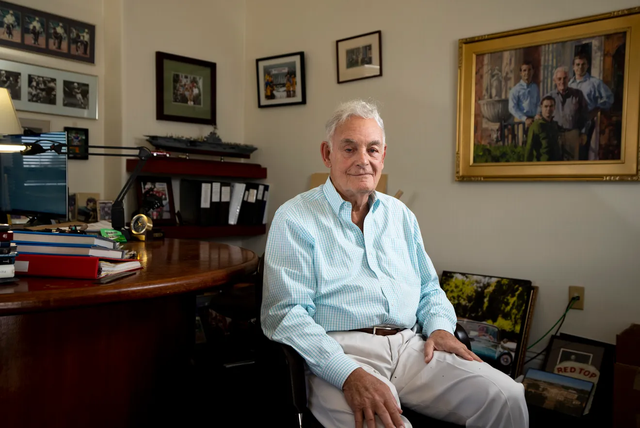
"In my second year at Harvard Business School, I was planning to return to Procter & Gamble's Advertising (Marketing) Department, where I had worked for eight months before going to business school. With that in mind, I bought a fixer-upper on Mt. Adams, then a declining neighborhood, which I nevertheless found charming, with the intention of "fixing" it up and walking to work.
That fall, I took a class at the Harvard MIT Joint Center for Urban Studies led by Professor Lewis Mumford, an outstanding civic and architectural critic. Professor Mumford talked about what good planning and good architecture could do to enhance peoples' lives. He was mesmerizing. After a while, he invited me back to his office to talk further. Inspired by him, I sold my junker. I decided that somehow or other, I would buy more houses on Mt. Adams and lead the renaissance of that hilltop village.
Upon graduating, I worked for a local developer for a year. During that time, I bought several houses in Mt. Adams. On June 1, 1961, I left my job to start Towne Properties. Shortly after that, partners Lambert Agin and Marvin Rosenberg joined the Towne Properties family.
With Procter's marketing strategy of filling an unmet need and the inspiration of Professor Mumford we turned five houses on St. Gregory Street into sixteen cutting-edge apartments for the young professional whose only other options were no better than dorm units. The result was the St. Gregory Row, which became our company's logo.
Following our Mt. Adams success, we took our approach to the suburbs. There through the mid-'70s, we created several award-winning apartment communities. After that we diversified, creating suburban apartments and downtown apartments, downtown and suburban offices, shopping centers, condos, single-family houses, mixed-use projects, land development, and recreational properties, and in 1975 began managing properties for others. As we diversified, we stayed true to our mission of creating "Great Places to Live, Work, Shop and Play," always focused on the need to continue marketing our properties from the initial lease-up through our long-term holding. As our associates and portfolios grew, we also prided ourselves on becoming a "Great Place to Learn and Give Back."
Today Towne Properties owns and manages a portfolio of more than 12,000 apartments, 130,000 commercial and home-owners associations, and over 600,000 sq. ft. of office space and two recreation properties. As we near our 60th anniversary, we are committed to doing more of the same. When asked what the best project we ever did was, we say "the next one."
The post Towne History: As told by Neil Bortz, Founder and Chairman appeared first on Towne in the News.
]]>